When you step into a professional bakery, you quickly realize that time is everything. That’s why compound chocolate is such a game-changer. Unlike traditional couverture chocolate, compound chocolate is crafted with cocoa powder and vegetable fats (like palm kernel oil) instead of pure cocoa butter. This simple substitution means you skip the tricky tempering process entirely, saving you hours of work while still delivering delicious results [1].
Whether you’re looking to coat cakes, mold intricate decorations, dip biscuits, or create rich fillings, compound chocolate is your reliable partner. It’s designed for efficiency and consistency, making it perfect for busy professional kitchens.
Choosing the Right Format for Your Needs
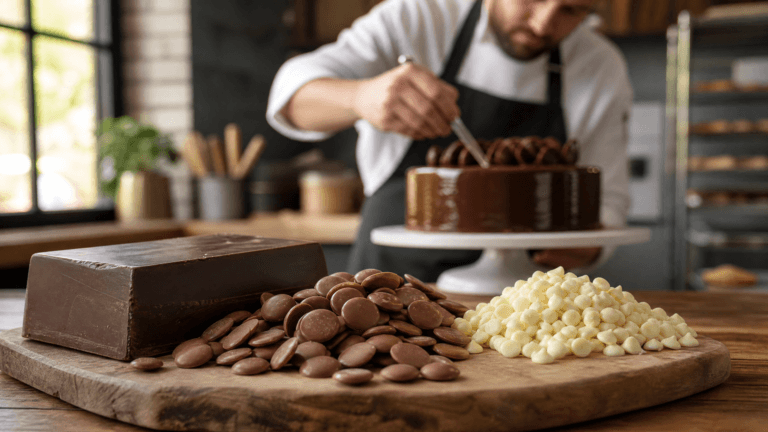
The format of chocolate you choose can make a world of difference in how easy your workflow is. PMF Turkey offers a variety of formats designed to fit every professional need:
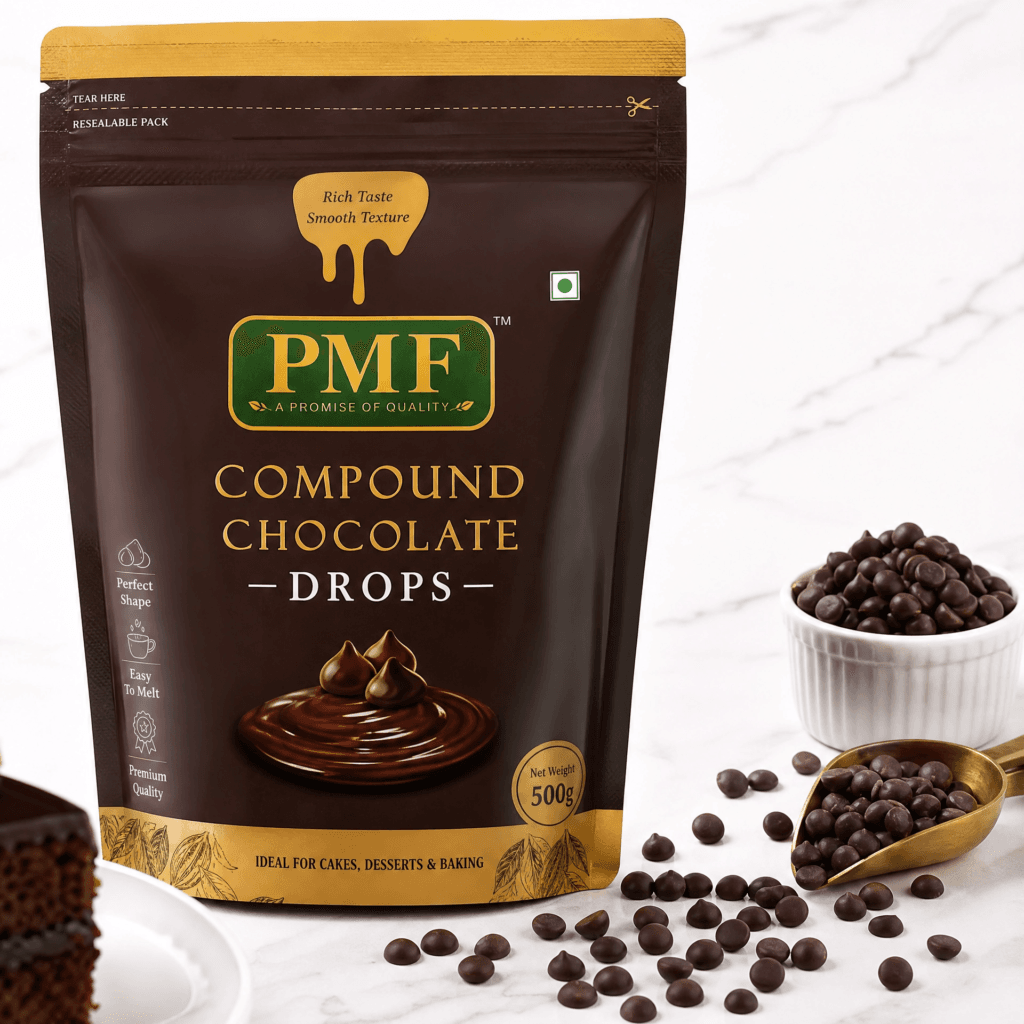
- Compound Chocolate Drops: Perfect for smaller batches, portion control, and quick melting. They are ideal for testing new recipes or when you only need a small amount. Explore our Compound Chocolate Drops for your next project.
- Compound Chocolate Coins: These melt evenly and quickly, making them fantastic for smooth coatings and detailed molds. Check out our Compound Chocolate Coins for reliable performance.
- Compound Chocolate Blocks: When you have large-scale production to tackle, blocks are the most practical and cost-effective choice. Discover our Compound Chocolate Block for high-volume needs.
- Chocolate Corrosion Sticks: Also known as chocolate bars or sticks, these are excellent for melting down in larger quantities for commercial coatings. Learn more about our Chocolate Bar Compound.
How to Melt Compound Chocolate Properly
Even though compound chocolate doesn’t require tempering, it still needs to be melted carefully to ensure a smooth, glossy finish. Overheating can ruin the texture and flow.
Follow these simple steps for perfect melting:
- Prepare a clean, dry bowl: Moisture is the enemy of chocolate. Make sure all your tools and bowls are completely dry to prevent seizing.
- Add the compound chocolate: Depending on your chosen format, add your drops, coins, or chopped block pieces to the bowl.
- Melt gently: Use low, controlled heat. A double boiler is often the safest method. Avoid direct, high heat which can scorch the chocolate.
- Stir until smooth: Stirring helps distribute the heat evenly and creates a perfectly fluid texture.
- Apply while fluid: Once smooth, it’s ready for coating, dipping, molding, or mixing into fillings.
Mastering the Art of Coating
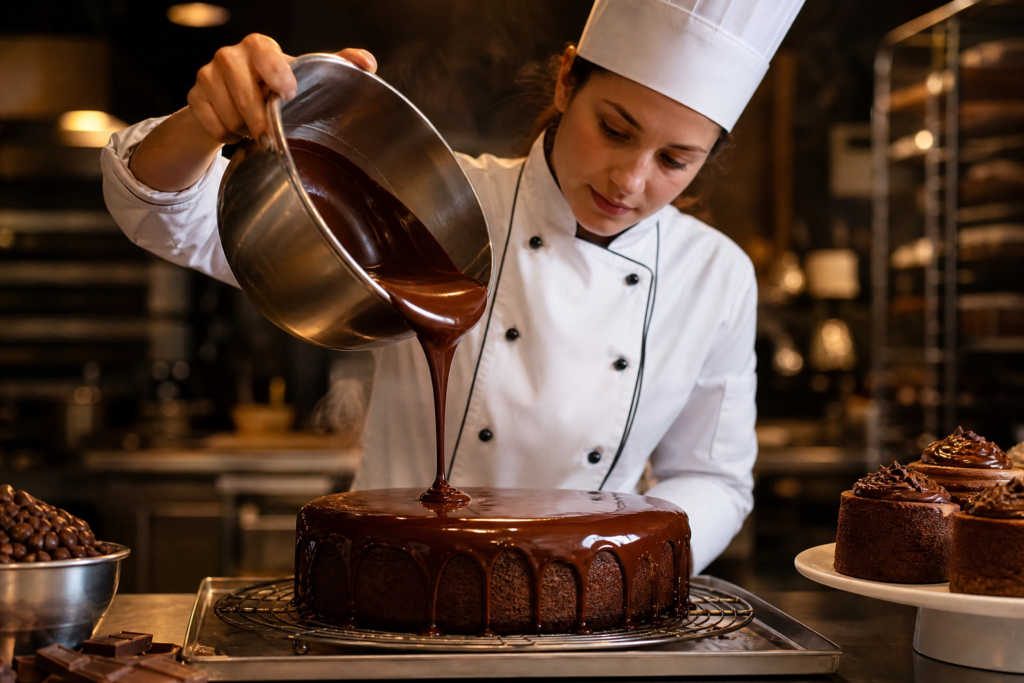
For a professional-looking finish, your compound chocolate needs to be fluid enough to coat the product evenly but thick enough to cling to the surface. Bakeries use it extensively for cakes, biscuits, wafers, donuts, bars, and frozen desserts.
Pro Tips for Coating:
- Ensure your product is at a consistent temperature before coating.
- Avoid wet surfaces, as moisture will cause the chocolate to seize and ruin the finish.
- For repeated, large-scale coating batches, use coins or blocks.
- For smaller batches or testing new flavor profiles, drops are your best friend.
For a deeper dive into the science of chocolate coatings, you can check out this guide on Chocolate vs. Compound Coating.
Creating Perfect Molded Decorations
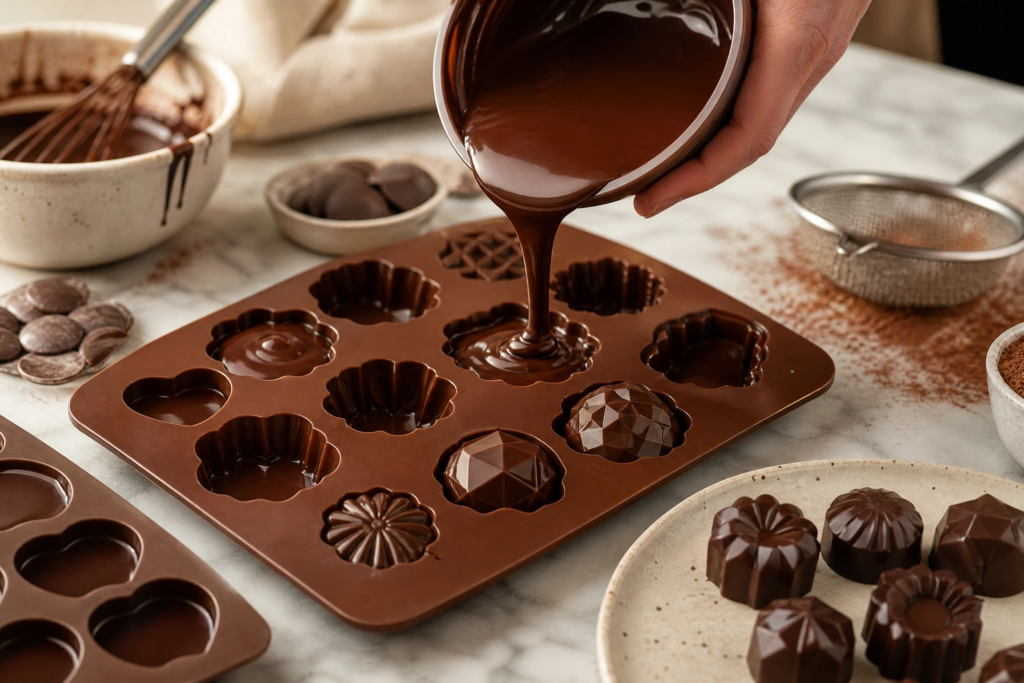
Compound chocolate is incredibly reliable for molded decorations, dessert cups, shells, seasonal shapes, and café pastry details.
To get the best results:
- Pour the melted chocolate into clean, completely dry molds.
- Tap the molds gently against the counter to release any trapped air bubbles.
- Let it set according to the product instructions and your kitchen’s ambient conditions.
While coins and drops melt evenly and are convenient for molding, blocks work beautifully when your production team is melting down larger quantities at once.
Enhancing Desserts with Fillings
Compound chocolate isn’t just for the outside; it’s fantastic for the inside too. It can support fillings when blended with compatible creams, nut pastes, praline bases, or other dessert preparations.
For ready-made chocolate filling applications, bakeries often look to our Ganache & Coating Chocolate depending on the desired texture and shelf life requirements.
Common Mistakes to Avoid
Even with compound chocolate, mistakes can happen. Here is how to avoid the most common pitfalls:
- Overheating: Always use gentle heat. High temperatures can affect the flow and final appearance.
- Adding water: Keep all moisture away from the melting chocolate to prevent texture problems.
- Using the wrong format: Blocks aren’t always ideal for small recipe tests, and drops might slow you down for massive coating batches. Choose wisely.
- Poor storage: Keep your chocolate in recommended storage conditions (cool, dry place) to protect its quality before you use it.
PMF Türkiye: Your Partner in Professional Baking
At PMF, we understand the demands of professional bakeries and food manufacturers. We supply a comprehensive range of compound chocolates, including drops, coins, blocks, and more. Our products are designed to elevate your coatings, molding, decorating, and dessert production.
Ready to upgrade your bakery’s production? Discover our full chocolate range and see how PMF can support your business.
Frequently Asked Questions
Can compound chocolate be used for cake coating? Absolutely. Compound chocolate is a favorite for cake coating because it melts easily and creates a practical, consistent finish for bakery production. It’s especially useful when your team needs speed and repeatable results without the hassle of tempering.
Can compound chocolate be used in molds? Yes, it works exceptionally well in molds for decorative shapes, shells, cups, and dessert pieces. Just remember to use clean, dry molds and melt the chocolate gently before pouring.
Why did my compound chocolate become thick or seize? This usually happens if it’s overheated, exposed to moisture (even a tiny drop of water), or held too long under poor conditions. Always use dry tools, gentle heat, and follow the product’s recommended handling instructions.