ver wondered how bakeries create those perfectly coated cakes, delightful decorations, and consistently delicious desserts? Often, the secret lies in a versatile ingredient that has become a staple in professional kitchens worldwide. Unlike its more temperamental cousin, couverture, this chocolate-style alternative is designed for ease of use, making it a true hero for busy chefs.
What Exactly is Compound Chocolate?
At its heart, this product is crafted for convenience. While traditional varieties rely on cocoa butter—which demands precise temperature control (known as tempering) to achieve its signature shine and snap—these specialized formulas use vegetable fats. This clever substitution makes the material incredibly easy to melt and work with, saving precious time and effort in a bustling environment.
For professional bakers, the benefits are clear: it significantly streamlines the handling process. It can be melted and applied effortlessly for coatings, molds, drizzles, and fillings, all with a much lower risk of “bloom” or an inconsistent finish.
The Building Blocks: Common Ingredients
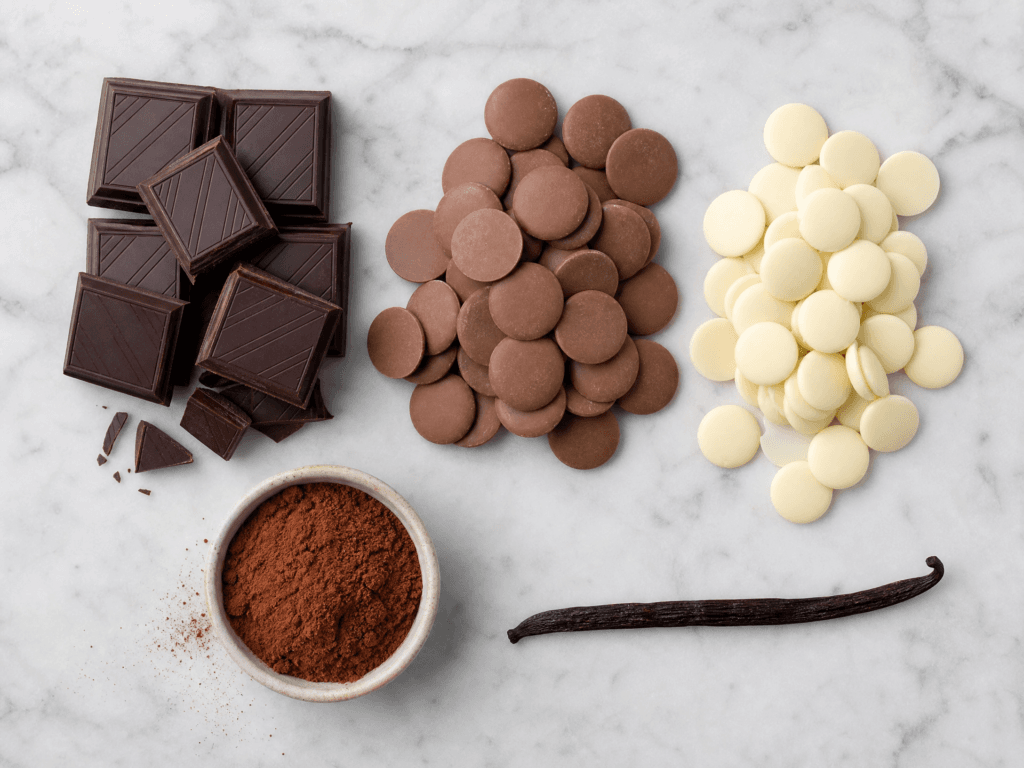
The precise recipe can vary by manufacturer, but typically includes:
•Cocoa powder or solids: These are responsible for the rich color and flavor.
•Sugar: Adds sweetness and balances the deeper notes.
•Vegetable fat: The key component that allows for easy melting and stable coating without complex tempering.
•Emulsifiers: Help achieve a smooth texture, optimal flow, and excellent mixing performance.
•Milk powder: Included in milk and white varieties for extra creaminess.
•Flavorings: Such as vanillin, to enhance the overall taste profile.
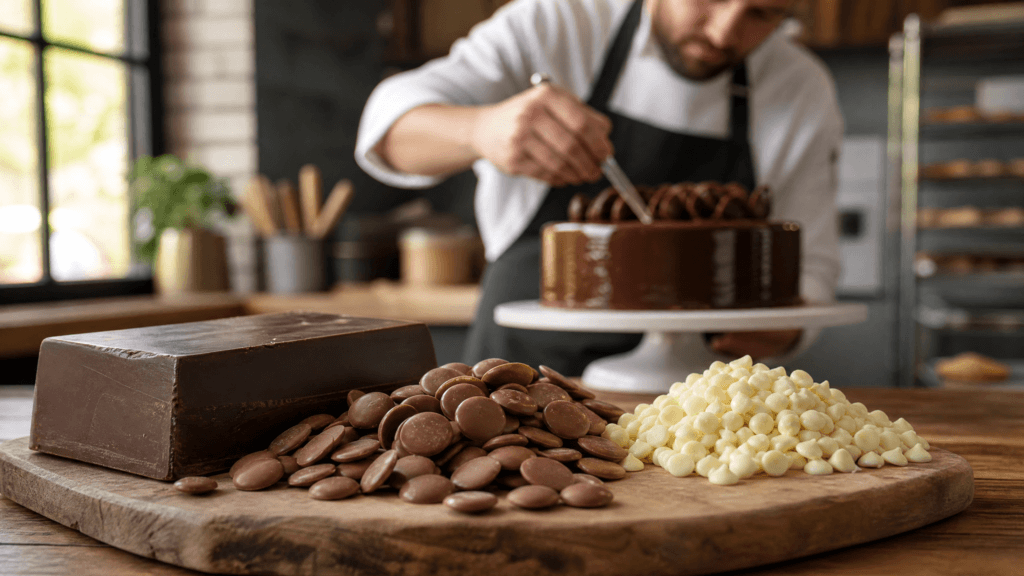
PMF offers a range of high-quality solutions, including Chocolate Block and Chocolate Coins, perfect for all your bakery needs.
Why Bakeries Love Compound Chocolate
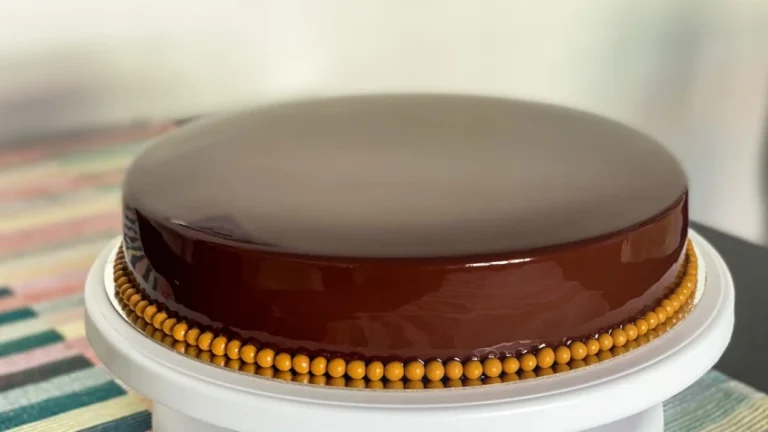
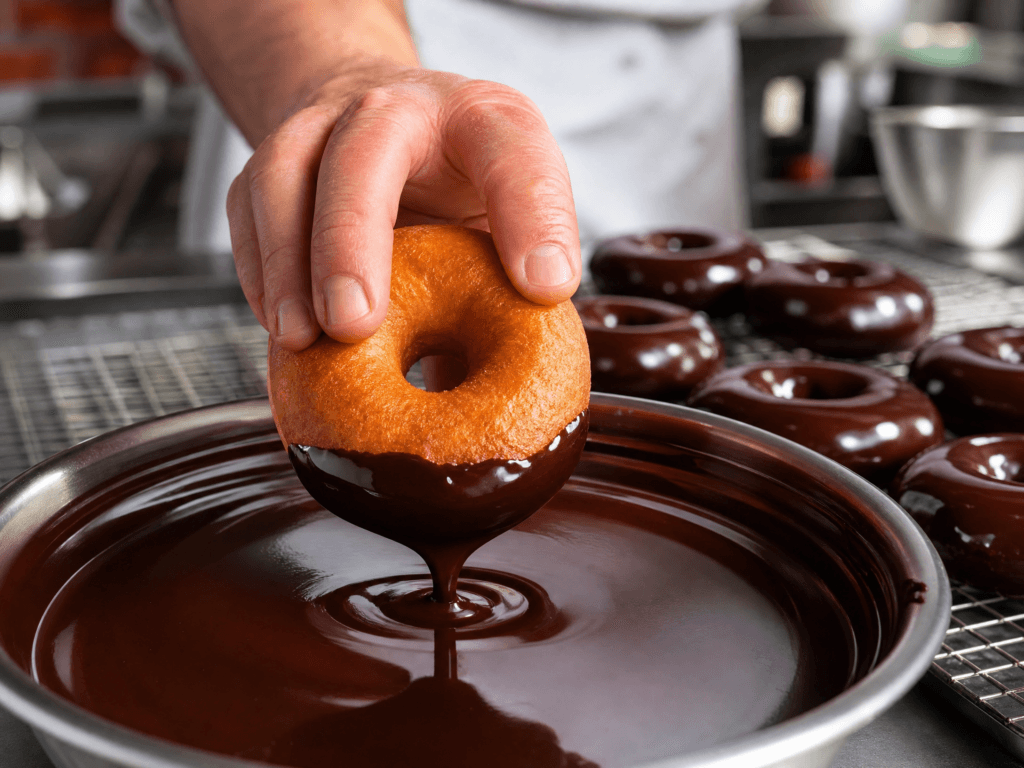
Bakeries worldwide embrace these products for their reliability and efficiency. They empower teams to coat cakes, dip biscuits, and decorate donuts without slowing down production. For many food businesses, it strikes the perfect balance between authentic flavor, cost-effectiveness, and speed.
| Bakery Need | Why Compound Chocolate Helps |
| Fast Coating | Melts easily and can be used without classic tempering steps. |
| Consistent Finish | Supports stable coating for repeated production. |
| Cost Control | Often more economical than couverture chocolate for high-volume use. |
| Easy Portioning | Drops and coins help teams measure and melt smaller batches. |
| Bulk Production | Blocks are practical for factories and larger kitchens. |
Versatile Applications in the Bakery
This versatile material finds its way into a myriad of bakery and dessert creations. It’s excellent for:
•Coating: Cakes, biscuits, wafers, bars, and pastries.
•Molding: Decorative pieces, shells, cups, and seasonal shapes.
•Decorating: Drizzles, lines, curls, and intricate finishing details.
•Fillings: Used in conjunction with creams, nuts, or dessert bases.
•Foodservice Desserts: Enhancing ice cream toppings and plated sweets.
Looking for more options? Explore our full range of Products to find everything a professional baker needs.
Choosing the Right Format
The ideal format depends on your kitchen’s workflow. Small drops are convenient for precise portioning, while coins melt evenly for coating and molding. For larger production runs, blocks are often the preferred choice for bulk purchasing.

Frequently Asked Questions About Compound Chocolate
Is compound chocolate real chocolate?
Technically, it is a chocolate-style ingredient. The primary difference is the fat: couverture uses cocoa butter, while these alternatives use vegetable fat for easier handling. For a deeper dive into the science of fats in confectionery, you can visit the American Chemical Society. Compound chocolate is a chocolate-style ingredient, distinct from couverture chocolate. The primary difference lies in their fat composition: couverture chocolate uses cocoa butter, while compound chocolate typically uses vegetable fat for its easier melting and handling properties.
Does compound chocolate need tempering?
One of the greatest advantages of most compound chocolate is that it does not require traditional tempering. This makes it an invaluable ingredient for bakeries focused on efficient coating, molding, and decorating. Always refer to the specific melting and storage recommendations provided for each product.
What is compound chocolate best used for?
Compound chocolate excels in applications requiring coating, molding, dipping, decorating, and as dessert toppings. It’s particularly well-suited for high-volume bakery production where speed, stability, and cost control are paramount.
At PMF, we are committed to providing high-quality ingredients and comprehensive technical support to empower your bakery’s success. Discover more about Our Commitment and how we can partner with you.